Archive for the ‘conference’ Tag

Can Service Design Take Off in the US?

Monday, March 1st, 2010

Despite the growth of service design firms in Europe, the success of the Service Design Network, and the globally self-organized service design drinks, including one in San Francisco, service design still really hasn’t made its move on the United States. And while many designers I talk to are very interested in service design, businesses are not demanding it.

Does this mean service design cannot take off in the United States? No. I think it’s got a shot if we can show businesses the value of such an approach.

During the Interaction10 conference, I had the opportunity to meet with Birgit Mager and Shelley Evenson, both founders of the Service Design Network, to talk about plans for a US conference to promote the value of service design to the business sector. One possible location we discussed is Boston, given Shelley’s current ties to Microsoft there. There have already been rumors that Microsoft will sponsor the event. Though these rumors, I have been told, are premature.

But if all goes as discussed, the one-day conference will take place in October around the same time as the Berlin conference. The plan is then for a full US service design conference in 2011, similar to the Berlin conference with content for practitioners, academics, and students. I hope to have a hand in both events, and am excited about bringing the conversation about service design back to the US after the dearth that resulted after the Emergence conference ceased.

While bringing conferences to the US will certainly help raise the profile of service design here, some designers I have talked to either dismiss service design or don’t think it will take hold. What do you think?

Service Design Network Conference 2009

Tuesday, November 10th, 2009

Crazy Pose

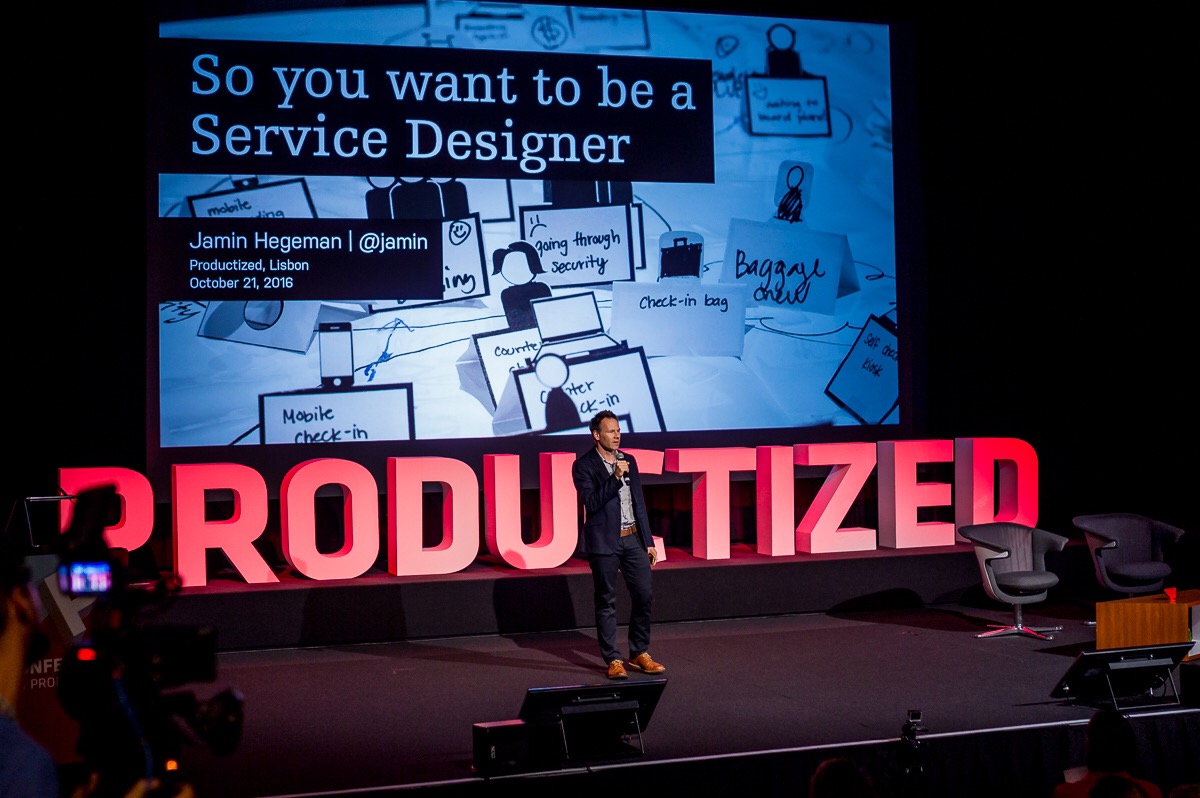
Two weeks ago, I was on the island of Madeira, Portugal, for the second annual Service Design Network conference. Like last year, I was part of the planning board. My main role was to review content submissions and help put together the conference program. I also served as a judge for the service design competition sponsored by Volkswagen, ran a workshop on building the SDN community platform, co-facilitated a workshop call “Learning from Failure” with Stefan Holmlid, and I again held the microphone and played the role of master of ceremony.

This was the fourth service design conference I had attended in as many years, and the third that I had helped put together. Overall, I thought it turned out well. But there was a lot of discussion on how to do things differently in the future. With so many great designers in one place, there was bound to be analysis and ideation on how to redesign the conference. After the conference, the planning team mulled over what we heard, what we through went well, what didn’t, and what to do in the coming year. Here are some of my thoughts and reflections.

Location

Coast

Madeira will be hard to beat as a conference backdrop. But its remoteness meant fewer attendees and students. The network is hoping to decide on a location for next year’s conference soon. I know Birgit Mager (network co-founder) got a lot of feedback on possible locations. My money is on the UK, though not necessarily London.

We also talked about venturing into the US, perhaps as a second conference next year.

Format

It seemed everyone I talked to was in agreement that the format of the conference felt too traditional and rigid. More breaks, more time for ad hoc conversation, more workshops (more doing), were all things I heard desired. I shared my experience with unconference formats with the planning team and I wouldn’t be surprised if that becomes part of the structure in the future. Personally, I would like to see the conference be more of a facilitator of conversation and action rather than a speaker platform.

Content

Learning from Failure workshop

While the content was good, it didn’t knock my socks off. I thought it was an improvement over last year. Still, it seemed like a lot of the same territory and ideas were covered (maybe I’ve been to too many of these). I’m hoping that with some format changes and some speakers from outside the community (someone mentioned Richard Branson), things will get shaken up a bit. The best content seemed to exist in the conversations that took place within the conference white space.

Community

“We should do this more often,” seemed to be the sentiment about having conversations and sharing ideas. The problem: the current SDN website does not make this easy. We got a lot of good insights into the needs of the community during the workshop I ran, and now the network is deciding on a course of action. I agreed to advise this activity, so if you have ideas what and how the network communicates with the larger community as well as its role in facilitating conversation and growth, let me know.

The Challenge

There is no shortage of good ideas for next year’s conference and what happens in between. The challenge is making it happen with limited resources and getting input from the service design community. It’s great to see that the momentum the network and conference have gained over the past two years inspired good debate on Twitter and a site to capture ideas for the 2010 conference. During the next year, the network needs to harness this energy and provide leadership while also facilitating grass roots activity.

Service Design: What’s Next?

Monday, December 1st, 2008

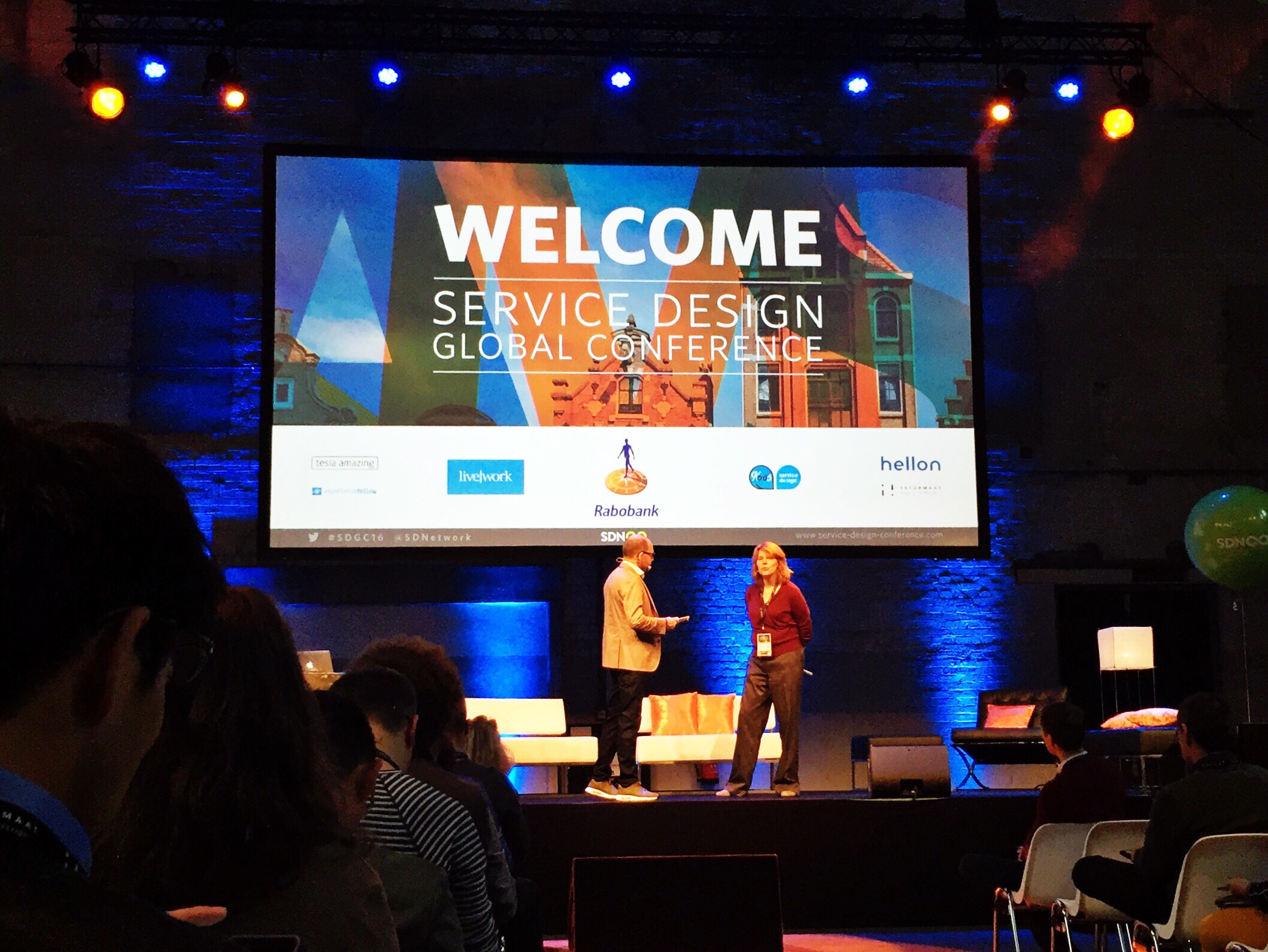
For the past three years, I have attended a conference on service design. In 2006, during the first ever conference on service design, everyone felt excited to come together as a community and begin talking about this new design practice. Last year, we pushed a bit at the borders of service design (Many Eyes as service design, for example), but we still had difficulty defining service design. This year in Amsterdam, during the first Service Design Network conference, it became clear that there are people practicing service design and everyone knows what it looks like even if they still have a difficult time talking about it. The question that lingered was, what do we do now, or as one participant put it during the closing Q&A, “what’s next?”

The answer, we continue to grow, go out and fail more often, and have another conference next year, did not completely satisfy me. I imagine others are still scratching their heads.

Overall, I really enjoyed the conference. But as usual, I enjoyed the conversations around the conference more than the presentations (I agree, my panel was a bit boring). In talking to people, I heard both positive and negative views. The presentation by Denis Weil of McDonald’s really piqued interest. But it may have just been the content. Academic research did not hold much sway for the practitioners. And many of the presentations seemed to be showing the same thing—design process—which everyone there likely already practices. It was clear that simply showing your process, unless truly unique, seemed trite.

I had several conversations about what service design is and how it might be different from other forms of design. This is a question I and others have had before. As a trained interaction designer, it was not difficult to transition to service design. In fact, there were only subtle differences that might be identified as different from interaction design. No one I talked to offered a clear definition, or a true distinction.

But I do believe service design is significant, as it has brought design into conversations outside of products, and resinates with organizations because most organizations identify more with providing a service than a product. And while designers have been making products that exist within services, it is a shift to put designers in charge or as co-producers of the actual service.

Does this mean service design requires a different process or skills? Yes and no. As I said, if you practice interaction design in its broadest sense, know the design process well, and take a user-centered approach, service design will not be a huge leap. You may already practice service design. However, as Shelley Evenson said during the conference, additional skills she would look for in service designers are business and systems skills: the latter because services often rely on other services.

I do not think service design is a distinct discipline of design. The term is important for helping to bring design into new territory. But I view service design as a practice of design. I’m sure there are some who will disagree, and I’d love to hear their views.

So what is next for service design? We will continue to refine its definition and its place in the design world. Some people will think this argument is important (like me), others will not. I also think service design will continue to gain momentum as success stories surface, like Engine’s design of Virgin Atlantic’s Terminal 3. Whether we call it service design, experience design, or just plain old boring design, what’s next is that more organizations will recognize the power of design to bring meaning and value to their services, and will increasingly call on experts to do that work. If calling it service design helps us get there, I’m all for it.

Participating in the Service Design Conference in Amsterdam

Wednesday, November 5th, 2008

I’m really excited to be participating in the inaugural Service Design Network conference in Amsterdam November 24–26, which I have also been helping to organize (thanks to my involvement with the Emergence conference). I am moderating a panel of Scandinavians on the 25th and then facilitating a workshop on service design for mobile services on the 26th with Alex Nisbett of Engine and former teacher and advisor, Shelley Evenson of Carnegie Mellon University.

While in London recently, I met with Alex at Engine’s studio to discuss the workshop. We had a great conversation about design, and then remembered we also needed to talk about the workshop. Inspired by the Malibu Oceanfront Hotel’s move to provide an iPhone or iPod Touch to their guests to deliver services, Alex proposed centering the workshop around designing mobile services for the next Olympics, which will be taking place in London. The idea would be that each person coming to the Olympics, from spectator to athlete, would receive a mobile device. The challenge for participants will be to generate services for a given persona who has particular needs. It will be an intersection of device, service, location, and need. I think it’s going to be a lot of fun, and I’m anxious to see what comes out of it.

The panel I’m moderating should be interesting as well: Service Design: Buzz words or real value to people and businesses? (The Scandinavian perspective with panelists from industry and academia). The participants—Erik Bystrom, TietoEnator Corporation; Stefan Holmlid, Linköpings universitet; Jukka Ojasalo, Laurea University of Applied Sciences; Satu Miettinen, Kuopio Academy of Design, Savonia University of Applied Sciences—and I have been exchanging thoughts, and everyone is really excited to talk about service design’s value to people and business (if you have question ideas, I’d love to hear them).

For the organization part, I’ve been helping with the submission process and program. We got a lot of good submissions and had to turn down quite a few. The lineup currently boasts Engine, Live/work, IDEO, and Continuum, as well as respected academics and others. I was happy to hear several of my Nokia colleagues in Europe will be attending and that they were impressed with the lineup.

If you’re going, please say hello.

Emergence 2007 Reflections

Wednesday, September 12th, 2007

We did it! After nine months of planning, the conference went off splendidly. The team and I are pretty pleased with ourselves.

We succeeded in bringing in more money and more registrations than we had hoped, and were also successful in bringing together a diverse group of speakers and attendees. We got a lot of praise from attendees during the conference. And that was great.

Leading up to the conference, I started getting sick. That’s what lots of stress and bad eating habits will do. But adrenalin kept me going.

On Friday, it was good that we only had two workshops and about 50 participants, as we experienced a lot of registration difficulties and were nearly overwhelmed. By Saturday morning, however, we had much of the process sorted.

Saturday morning I gave a very short introduction, during which I forgot half of what I planned to say due to nervousness and my clogged head. But who cares when you’re followed by Martin Wattenberg!

I got to meet some great people, including Chris Downs, Mark Jones, Allan Chochinov, Robert Frabricant, Harold Hambrose, Jennifer Leonard, Daniela Sangiorgi…well, I guess all the speakers really. Mark, Allan, Jennifer and I stayed up pretty on Saturday and even did a little drinking and dialing. Shelley Evenson took it well.

I also got to see familiar faces, like Todd Wilkens, Alexa Andrzejewski, and Irene Chong, all of whom I worked with during the summer at Adaptive Path.

As far as the gist of the day, Saturday seemed to either confuse or engage everyone, so much so that the ensuing conversations at the Warhol party caused Chris Downs of live|work to redo his keynote presentation for Sunday morning.

Chris’ keynote really set the pace for Sunday, which turned out to be a very powerful and inspiring day. But it may not have seemed as such without the previous day’s presentations and conversations. The conference concluded with everyone together for Oliver King’s panel and Richard Buchanan’s keynote, both of which everyone seemed to enjoy.

I was happy to have been able to attend most of the presentations. I missed one set on Sunday morning, feeling like I needed a break. But with my mind on keeping the show going, I did not have too much time to process, and I took zero notes. Fortunately, others did.

After the conference, I promptly went home and planted myself on the couch. I tried to sleep but got up to write a thank you email to the other conference organizers: Ayça Akin, Matt Forrest, Joe Iloreta, and Kipum Lee.

The past two days I’ve been recuperated, quite literally, as my illness finally took over. On Monday I panicked about my thesis. But by Tuesday morning, I clambered up the rocky slope I was on, and could at least see the mountain range in front of me left to climb. This brought about some peace.

So Emergence is over…or is it? There’s still a lot of updates to make to the website, including uploading presentations and podcasts. And if we’re wise, we’ll start planning next year’s conference now.