Archive for the ‘experience design’ Tag

Wall Street: Hurdle for Service/Experience

Saturday, January 5th, 2008

This morning I read a NY Times article called “Put Buyers First? What a Concept” about an experience the writer had with Amazon.com days before Christmas. The PlayStation 3 he bought for his son had not arrived, so he looked up the tracking details only to find it had been delivered and signed for by his neighbor, who then put it in a common area. There is was likely stolen.

He realized it was not Amazon’s fault, but called anyway. They sent him a new one for free, which he got on Christmas Eve.

The rest of the article talks about how this is great customer service and how Jeff Bezos has made a lot of sacrifices in the name of customer experience.

Wall Street, however, has never placed much value in Mr. Bezos’ emphasis on customers. What he has viewed as money well spent — building customer loyalty — many investors saw as giving away money that should have gone to the bottom line. “What makes their core business so compelling is that they are focused on everything the customer wants,” said Scott W. Devitt, who follows Amazon for Stifel Nicolaus & Company. “When you act in that manner many times Wall Street doesn’t appreciate it.” What Wall Street wanted from Amazon is what it always wants: short-term results. That is precisely what Dell tried to give investors when it scrimped on customer service and what eBay did when it heaped new costs on its most dedicated sellers. Eventually, these short-sighted decisions caught up with both companies.

However, Amazon is doing well, the article states, largely due to its focus on the customer, which has produced great customer loyalty.

All of this, however, comes at a price. Indeed, as I’ve written before, customer service isn’t cheap. Certainly, a fair amount of the hundreds of millions of dollars Amazon has spent on R&D has gone toward developing, say, the Kindle, but a good deal of it has also gone toward improving the customer experience. Amazon is willing to lose money on some of its most popular items, like the latest Harry Potter novel. And even with Amazon Prime, it must surely swallow millions of dollars in shipping costs. Indeed, in a presentation to analysts in late November, the company’s chief financial officer, Thomas J. Szkutak, showed one slide that read, “Over $600 Million in Forgone Shipping Revenue.” And that was just for one year.

As I have said before, although I’ve been designing in a bubble at grad school, I do realize that companies and organizations also have to pay attention to the bottom line when making investments in good design and good experience. Though I wonder if there will ever be a major shift in the way businesses view the investment in the design of service and customer experience so that it’s not so short sighted. It seems Amazon is willing to suck it for a bit to improve the customer experience. And it pays off. (Although, is the focus on customer experience a design perspective—I don’t know.)

Some further questions I have: What is the general willingness of companies to invest in service or experience design? Is there an opportunity for design to help shift the perceived value of investing in the customer experience—and by association, customer service? Or will this remain a hurdle?

Designed to Never End

Saturday, December 29th, 2007

Adam Greenfield seemed really excited about Matt Webb’s year-end wrap-up, so I checked it out. It’s a bit of an abstract ramble of ideas, which didn’t excite me as much. But one idea sparked a thought:

“In order to keep going, the path of a user through a website must be designed to never end. In order for the website to grow, the path of the user must be designed to bring in more users, as in a nuclear chain reaction.”

While he’s talking about a website, I don’t see why this wouldn’t apply to all products and services. The the point that is interesting is “designed to never end.” Often in design, we create flow charts or service blueprints—documents that show the beginning of the experience and where it ends. While these have their value, should we also create models of the experience that don’t end?

This reminds me of my thoughts on changing the way businesses think about cost, which was stimulated by feedback from UPMC regarding our design solutions. They asked how we could create buy-in or show that our designs reduce cost. If there were ways to show the experience as endless, continually growing, could this help the argument that producing great experiences that keep people engaged and coming back for more is a more fulfilling (both for the consumer and producer) than reducing costs (not that reducing costs isn’t important, just not the most important aspect)?

I believe I read something recently—perhaps in BusinessWeek—that mentioned companies are starting to focus more on the experience than the cost. So perhaps this change is beginning.

The business case aside, the idea of products and services designed to never end seems worthy of keeping in mind.

What is the experience?

Saturday, December 22nd, 2007

Designers often argue about whether we’re designing an experience or designing for an experience, and ponder the more philosophical aspects of having an experience. Is an experience something designers shape? Is it something participants make?

Arguably, every experience is unique. But if this is true, what do we mean when we talk about the experience?

This makes for some great debate for designers. But what do the people who use the products and services we make think when they talk about experience?

I’ve been thinking about this question a lot recently, instigated by my…um…experience…designing for patients of a neurosurgery clinic. The patients referred to the experience as what they expected to happen: what they thought the experience would be like in a general sense. They would check-in, wait, it would be crowded, they’d get called to an exam room, wait some more, see the doctor, then check out.

But there was also the experience of what actually happened. They complained about waiting. The doctor joked with them, saying it was his goal to make them wait. They laughed and felt better.

Which is the experience? The perceived or the actual? Which is more important in the eyes of the patient? Which is more important in terms of the service? What can designers design?

I will continue to ponder.

Charmr Project: Diabetes Management

Tuesday, August 14th, 2007

Interaction Designer, Adaptive Path, Summer 2007

Charmr

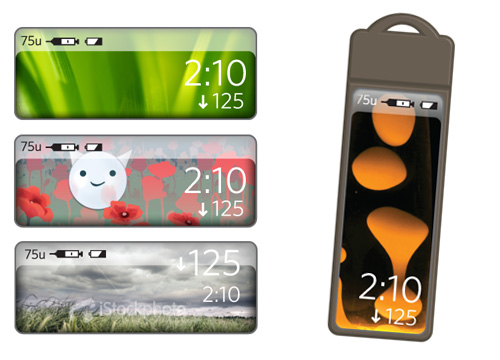
Charmr was an internal R&D project at Adaptive Path inspired by an Open Letter to Steve Jobs by a prominent diabetes blogger, Amy Tenderich. The goal was to generate enthusiasm for human-centered thinking and inspire broader change throughout the medical device and design industry.

Brainstorming I

In eight weeks, we went from user research with diabetics to final concept of what the experience could be. My role included conducting interviews, background research, research synthesis, concept generation, and communication of the envisioned experience.

[wp_youtube]VQe1tssyGkU[/wp_youtube]

Charmr screens

Charmr system

More information can be found on Adaptive Path’s website.

Portfolio

About

I am a senior designer for Nokia Design, and have a masters of interaction design from the School of Design, Carnegie Mellon University. More about »

Del.icio.us